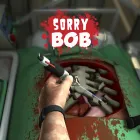
Sorry Bob











Sorry Bob: When Things Go Wrong on Purpose
Sorry Bob places you in situations where things are almost designed to go wrong—and then asks what you’ll do next. From the very first interaction, the game makes it clear that perfection isn’t the goal. In fact, failure is part of the experience, not something to reload away.
Your Hand Is the Real Puzzle
At the center of the gameplay is a single floating hand. It sounds simple, but this hand is anything but obedient. It drifts, twists, and reacts to your input with a mind of its own. You’re not controlling a character—you’re negotiating with a tool that constantly resists certainty.
Every movement feels slightly unstable, and that instability is intentional. The challenge doesn’t come from complex objectives but from learning how much control you don’t have. Sorry Bob turns basic interaction into a puzzle, where the question isn’t “What should I do?” but “How will this hand behave if I try?”
Physics as the Hidden Game Director
Gravity, momentum, and weight quietly dictate every moment in Sorry Bob. Objects don’t wait politely to be used—they slip, roll, collide, and react in ways that feel just unpredictable enough to keep you guessing. A small nudge can send tools spinning. A careless release can trigger a chain reaction you never planned for.
Objectives vs. Reality
On paper, each scenario seems clear. There’s something to do. A task to complete. A goal waiting at the end. In practice, reality quickly interferes. What starts as a simple action often escalates into a balancing act of corrections, recoveries, and sudden adjustments.
Related Simulation Games