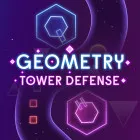
Geometry Tower Defense












Unlike finite tower defense games, in Geometry Tower Defense, there is no stable “end state.” In this game, survival is not about building a perfect setup—it is about maintaining efficiency under accelerating constraints.
Gameplay Overview
In Geometry Tower Defense, players defend their base against continuous waves of enemies moving along winding paths. The core gameplay revolves around placing geometric towers at strategic points, each with unique attack patterns and ranges. As enemies are defeated, players earn gold, which can be used to upgrade existing towers or reposition defenses by selling and rebuilding.
Common Mistakes
- Over-upgrading early towers: Leads to poor scalability in later waves
- Ignoring repositioning: Static layouts become inefficient as paths fill with faster enemies
- Spending all gold immediately: Removes the ability to adapt under pressure
- Focusing on single point: Reduces overall damage coverage and efficiency
How to Survive Longer
Dynamic Tower Reallocation
Instead of treating towers as permanent assets, view them as temporary investments. Selling and repositioning allows you to adapt to wave composition changes. This works because late-game efficiency depends on coverage optimization, not sunk cost.
Chokepoint Layering Strategy
Build multiple overlapping damage zones rather than a single strong line. Layered chokepoints ensure enemies remain under fire longer, increasing total damage per unit. This approach scales better because it multiplies effectiveness without proportional cost increases.
Gold Flow Optimization
Maintain a reserve instead of fully spending resources. This enables rapid response to unexpected difficulty spikes. The reasoning is simple: flexibility has higher survival value than marginal damage gains from over-upgrading.
In Geometry Tower Defense, success is not about strength alone but about maintaining control as the game’s pressure continuously escalates.
Explore More Tower Defense Games