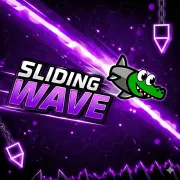
Sliding Wave














Sliding Wave
Sliding Wave is a momentum-based skill game where your success depends on timing, control, and flow. Instead of just reacting fast, you have to move with purpose, because your movement determines how the run unfolds.
In the game, you don’t simply “jump from point A to point B.” You guide a sleek Wave through sloped tracks packed with precision hazards, where your momentum, and when you rise or descend, directly impacts your survival.
Why speed alone isn’t enough to succeed
Speed feels exciting, but in Sliding Wave it’s not the goal by itself. Going fast without control can be deadly:
- sharp turns punish mistimed movement
- narrow passages demand precision
- elevation changes can ruin your line if you rise or descend too late
In other words, you’re racing against hazards, not just the clock.
Gameplay Overview
Basic Rules
- Hold to move the Wave upward (rise through the hazardous terrain)
- Release to descend
How movement builds speed
Speed in Sliding Wave isn’t just something you unlock—it’s something you create and preserve through good movement decisions. When you rise and descend at the right moments, you maintain momentum and keep your travel smooth across dangerous slopes.
When your timing is off, you don’t just “lose speed”—you often lose your safest line, increasing the chance of crashing into
- Spikes and trap zones
- Precision hazards near sharp geometry
- Drop-offs and sudden vertical shifts
The importance of maintaining flow
Players who perform best treat each stage like a continuous sequence rather than separate reactions. The key is
- avoid overcorrecting
- keep your rhythm consistent through curves
- prepare your rise/release decisions before hazards arrive
Maintaining flow helps you stay in control even as difficulty ramps up.
Tips for Improving Your Performance
- Practice timing in “rhythm mode,” not “panic mode": Focus on building consistent rise/release patterns instead of reacting instantly to every hazard.
- Prioritize flow through turns: When curves appear, don’t overcorrect. Adjust timing smoothly so your line stays stable.
- Treat narrow passages like precision checks: In tight spaces, small timing errors are more punishing. Slow down your decision-making (mentally), even if the game is fast.
- Use checkpoints to train your weak sections: Instead of restarting the entire stage repeatedly, practice specific tough segments until your movement feels automatic.
Suggested Arcade Reflex Games